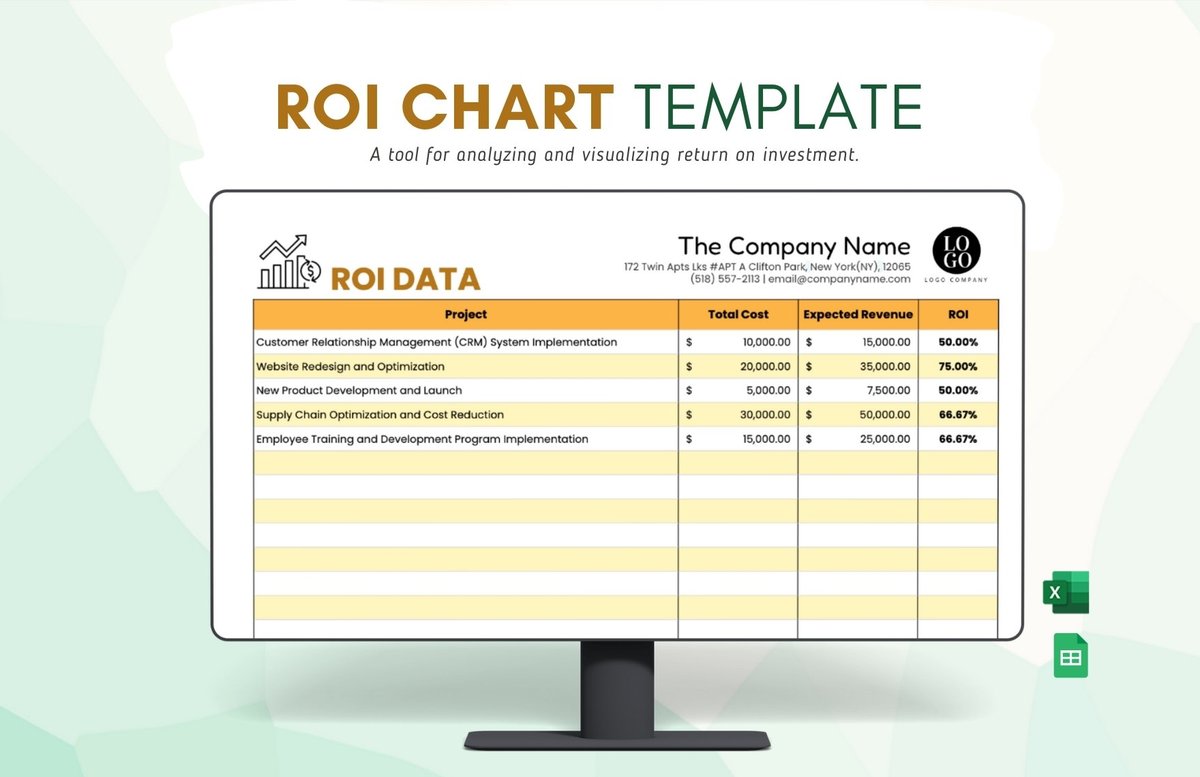
Every strategic move a business makes, from launching a new product to upgrading its IT infrastructure, boils down to a fundamental question: Is this investment truly worth it? Without a clear answer, even the boldest visions can crumble. This is precisely where Cost-Benefit Analysis (CBA) & ROI become indispensable tools, providing the critical lens you need to see beyond immediate expenses and understand the true financial impact of your decisions.
CBA and ROI aren't just buzzwords for finance teams; they're the bedrock of smart, sustainable business growth, guiding you to allocate resources wisely and identify opportunities that truly drive value.
At a Glance: What You'll Learn About CBA & ROI
- What it is: How Cost-Benefit Analysis quantifies project value by comparing all costs and benefits in monetary terms.
- Why it matters: CBA simplifies complex decisions, reveals hidden financial impacts, and steers you toward the most profitable paths.
- The core steps: A practical, 6-step framework to conduct a thorough and accurate analysis.
- Key metrics: Understanding ROI, NPV, IRR, Payback Period, and Benefit-Cost Ratio to measure success.
- Real-world application: A detailed example of how a cloud upgrade project leveraged CBA.
- Advantages & limitations: When CBA shines and what its challenges are.
- Best practices: How leaders can ensure their CBAs are effective and actionable.
The Power Duo: Cost-Benefit Analysis and Return on Investment
Think of a business decision as navigating a dense forest. Without a compass, you might wander aimlessly, wasting resources and time. Cost-Benefit Analysis (CBA) is that compass, a systematic process that helps organizations compare the financial and non-financial costs of a project against its potential benefits. It’s about converting everything—from software licenses to improved customer satisfaction—into a common denominator: money.
Once you have that monetary comparison, you can calculate the Return on Investment (ROI). ROI is the ultimate scorecard, telling you precisely how much profit or value you’re getting back for every dollar you put in. It's not just about spending less; it's about spending smart. CBA provides the comprehensive data you need to calculate an accurate ROI, revealing hidden costs, identifying overlooked benefits, and ultimately helping you select the most advantageous options.
Why is this so crucial? Because in today's fast-paced market, every dollar, every hour, and every strategic move counts. Businesses that consistently apply CBA and focus on ROI are better equipped to reduce waste, optimize value, and make decisions that stand the test of time.
Why a Thorough Cost-Benefit Analysis is Your Strategic Advantage
In a world filled with countless options and finite resources, a robust CBA offers unparalleled clarity. It’s more than just crunching numbers; it’s about strategic foresight.
- Informed Decision-Making: Instead of relying on gut feelings or incomplete information, CBA provides quantitative data, transforming subjective opinions into objective facts. You make choices based on concrete evidence, not just hope.
- Financial Clarity: By translating all potential costs and benefits, both tangible and intangible, into monetary terms, CBA gives you a crystal-clear financial picture. This simplifies complex feasibility evaluations and budget allocations.
- Identifies Trade-offs and Opportunity Costs: Every decision has an alternative. CBA forces you to consider what you're giving up by choosing one path over another. These "opportunity costs" — like the profits missed from an alternative investment or the delayed progress on another project — are crucial for a complete understanding of a project's true cost.
- Proactive Risk Assessment: A detailed analysis encourages a thorough evaluation of potential risks, uncertainties, and challenges. By anticipating problems, you can develop mitigation strategies before they impact your bottom line.
- Structured Approach: CBA provides a consistent framework, ensuring that all relevant factors are considered systematically. This reduces the chance of overlooking critical details and fosters more disciplined planning.
The 6 Steps to a Powerful Cost-Benefit Analysis
Conducting a successful CBA requires discipline and a structured approach. While the complexity might vary, these 6 steps form the backbone of every effective analysis. On average, a formal CBA can take 2–6 weeks, but the payoff is significant, potentially leading to a 23% higher ROI.
Step 1: Build a Framework & Set Project Goals
Before you dive into numbers, define your mission. What exactly are you trying to achieve?
- Define Clear Project Goals: Use the SMART framework to make your goals Specific, Measurable, Achievable, Relevant, and Time-bound. For instance, instead of "increase sales," aim for "increase Q3 sales by 15% in the Northeast region through new marketing campaign." Well-defined objectives have been shown to improve project success rates by 78%.
- Scope the Project: Clearly outline what will be included in your analysis and, just as importantly, what will be excluded. This prevents scope creep and keeps your analysis focused.
- Identify Stakeholders: Who will be affected by or involved in this project? This includes employees, customers, suppliers, investors, and even the broader community. Understanding their perspectives helps identify all potential costs and benefits.
- Determine Data Sources: Where will you get your information? Think about internal financial records, market research, industry benchmarks, expert interviews, and vendor quotes.
Step 2: List All Costs and Benefits
This step is about brainstorming every conceivable expense and gain associated with your project, leaving no stone unturned. Think broadly, considering both direct and indirect impacts.
Potential Costs to Consider:
- Direct Costs: These are the immediate, obvious expenses directly tied to the project.
- Examples: Software licenses ($50K), new equipment purchases (e.g., restaurant equipment for $50K), staff hiring and salaries, building leases ($5K/month or $60K/year), raw materials.
- Indirect Costs: Additional expenses not directly tied to the project's core but still impacting it.
- Examples: Ongoing training for new systems ($15K/year), operational overhead, utilities, insurance, increased administrative tasks.
- Opportunity Costs: What you forgo by choosing this project over another. These are often hidden but critical.
- Examples: Delayed projects (potential $25K loss), missed gains from alternative investments (e.g., $30K annually in missed profits), loss of market share from not pursuing another initiative.
- Intangible Costs: Harder to quantify but significant long-term impacts.
- Examples: Employee dissatisfaction from new processes, negative environmental impacts, damage to brand reputation, decreased customer loyalty due to service disruptions.
Potential Benefits to Consider: - Direct Benefits: Tangible and easily measurable financial gains.
- Examples: Increased sales ($50,000 per month or $600,000 annually), reduced operating costs, lower supply chain expenses, improved efficiency leading to direct savings.
- Indirect Benefits: Positive impacts that don't have an immediate, direct financial correlation but contribute to overall success.
- Examples: Improved customer loyalty, enhanced brand recognition, better market positioning, stronger vendor relationships.
- Intangible Benefits: Difficult to quantify directly but lead to enhanced productivity, satisfaction, and long-term value.
- Examples: Improved employee morale, higher customer satisfaction (e.g., 10% improvement leading to $5,000 additional monthly sales), better data security, enhanced scalability. These are often crucial for a business's long-term health, much like investing in personal development can lead to intangible benefits that eventually translate to career growth and job satisfaction. For example, considering the value of a Coursera certificate might seem intangible at first, but it can lead to skill enhancement, which boosts productivity and career opportunities.
- Long-term Benefits: Ongoing advantages that accumulate over time.
- Examples: Sustained cost savings, continuous revenue growth, larger market share, competitive advantage.
Step 3: Assign Monetary Values
This is where the rubber meets the road: converting everything identified in Step 2 into cold, hard cash. Even intangible elements need an estimated monetary value for a complete comparison.
- For Tangible Items: Use actual invoices, quotes, financial records, or industry averages.
- For Intangible Items: This requires creativity and educated estimations.
- Surveys & Benchmarks: Survey employees or customers, or look at how competitors or similar businesses value similar intangibles.
- Proxy Values: If you can't measure it directly, find something related that you can measure. For example, improved employee morale might be proxied by reduced turnover costs (retaining an employee saves an estimated $4,000 in turnover expenses).
- Customer Lifetime Value (CLV) Models: Use CLV to estimate the financial impact of improved customer satisfaction or loyalty (e.g., brand loyalty increasing sales by 5% across all locations, equating to $100,000 annually).
- Expert Opinion: Consult with subject matter experts to get informed estimates.
The goal isn't perfect precision for every intangible, but rather a reasonable, justifiable estimate that allows for comparison.
Step 4: Calculate Key Metrics
Once you have all your monetary values, it's time to crunch the numbers and derive meaningful insights.
- Basic ROI Formula: This is your foundational metric.
- (Net Benefits – Costs) / Costs × 100
- Example: If net benefits are $80,000 and costs are $50,000, then ($80,000 – $50,000) / $50,000 × 100 = 60% ROI.
- Net Present Value (NPV): Crucial for long-term projects, NPV measures the future cash flow value in today's terms, accounting for the "time value of money." A dollar today is worth more than a dollar tomorrow. Typically, a discount rate of 3-8% is used.
- Calculation: For each period, (Cash Flow / (1 + Discount Rate)^Period Number).
- Example: A $30,000 cash flow in Year 1 with a 5% discount rate would be $30,000 / (1 + 0.05)^1 = $28,571 in today's dollars.
- Internal Rate of Return (IRR): This predicts the annualized rate of return expected from the investment. It’s the discount rate at which the NPV of all cash flows from a project equals zero. A higher IRR means a more profitable project.
- Payback Period: How long will it take to recoup your initial investment? This metric is simple but valuable for understanding liquidity and risk.
- Formula: Total Investment / Annual Net Benefit.
- Example: A $500,000 investment with $100,000 annual net benefit has a 5-year payback period.
- Benefit-Cost Ratio (BCR): Directly compares total benefits to total costs.
- Formula: Total Benefits / Total Costs.
- A BCR greater than 1.0 indicates that the benefits outweigh the costs, suggesting a good investment.
- Sensitivity Analysis: Don't just rely on a single forecast. Sensitivity analysis examines how changes in key assumptions (e.g., material costs, sales volumes, project timelines) affect your project's outcome. This helps evaluate risk under different scenarios.
- Example: A 2% increase in raw material costs might reduce your projected NPV by $8,000, giving you a clearer picture of potential vulnerabilities.
Step 5: Review Results and Decide
With your calculations complete, it’s time for critical analysis.
- Analyze Findings: Look at the cumulative impact. If the net benefit is positive, and all key metrics (ROI, NPV, etc.) align with your organization’s benchmarks, it’s a strong indicator to proceed. If costs outweigh benefits, you might need to cancel or revise the plan.
- Consider Qualitative Factors: While CBA focuses on quantitative data, don't ignore qualitative insights. How does the project align with your company culture? What are the strategic implications that aren't easily monetized?
- Visualize Data: Use charts, graphs, and summary tables to present your findings clearly. This makes complex data accessible to all stakeholders.
- Assess Risk vs. Reward: Combine your sensitivity analysis findings with your overall risk appetite. Is the potential reward worth the inherent risks?
Step 6: Make a Recommendation Based on Findings
This final step isn't just about presenting numbers; it's about providing clear, actionable guidance.
- Offer a Data-Driven Recommendation: Based on your thorough analysis, clearly state whether the project should proceed, be modified, or be rejected.
- Justify Your Stance: Support your recommendation with the calculated metrics, sensitivity analysis results, and any critical qualitative factors.
- Maximize Value: Focus on how the chosen path (or suggested modifications) will maximize value for the organization, considering risks, long-term sustainability, and alignment with overarching strategic goals.
Core ROI Metrics Explained for Better Decisions
Understanding the nuance behind each financial metric empowers more astute decision-making.
- Net Present Value (NPV): This is perhaps the most robust metric for capital budgeting. It tells you the value added by a project in today's dollars. A positive NPV means the project is expected to generate more cash than it costs, after accounting for the time value of money. The higher the NPV, the better.
- Internal Rate of Return (IRR): While NPV gives you a dollar value, IRR provides a percentage rate of return. It's often used to compare projects with different initial investments. If the IRR is higher than your company's required rate of return (or cost of capital), the project is generally considered acceptable.
- Payback Period: Simple and intuitive, the payback period is excellent for assessing liquidity and risk. Projects with shorter payback periods are often preferred if cash flow is a primary concern or if the investment environment is highly volatile. However, it doesn't account for profitability after the payback period or the time value of money.
- Benefit-Cost Ratio (BCR): This ratio is particularly useful for comparing projects of different scales. A BCR of 2.4:1, for instance, means that for every dollar invested, you get $2.40 back in benefits. It's a quick way to see if a project is economically sound.
Case Study: Cloud Infrastructure Upgrade Project
Let's look at how a mid-sized software company applied CBA to a crucial decision: upgrading its cloud infrastructure.
The Scenario: The company was struggling with outdated on-premise servers, leading to frequent downtime and high maintenance costs. They needed to evaluate a shift to a modern cloud environment over three years.
Costs Identified (over 3 years):
- One-Time: Hardware & software licenses: $1,200,000; Migration services: $450,000; Staff training: $150,000.
- Annual (recurring): Cloud service fees: $240,000; Ongoing maintenance: $85,000.
- Contingency: 15% added to all initial cost estimates.
- Opportunity Cost: Lost productivity due to delaying the upgrade: $300,000/year.
Benefits Identified (over 3 years): - Annual: Reduced downtime: $850,000; Operational efficiency gains: $420,000; Lower energy costs: $95,000; Reduced IT support needs: $180,000.
Key Results & Metrics (using an 8% discount rate for NPV): - Payback Period: 2.1 years
- Net Present Value (NPV): $1.8 million
- Benefit-Cost Ratio: 2.4:1
- Total Monetized Benefits over 3 years: $2.55 million
- Strategic Gains: Beyond the numbers, the upgrade promised better data security, quicker service delivery, improved scalability, and reduced environmental impact through energy savings.
The Decision: With a positive NPV, a strong BCR, and a relatively quick payback period, coupled with significant strategic advantages, the company decided to proceed with the cloud upgrade. The CBA provided a clear, data-driven justification for a major investment.
When to Bring Out the Cost-Benefit Analysis
CBA isn't just for big-ticket items; it's a versatile tool applicable across various business scenarios.
- Evaluating Large Investments: Deciding whether to purchase new equipment, expand facilities, or invest in major infrastructure projects.
- Assessing New Projects or Initiatives: Launching a new product line, entering a new market, or implementing a new operational process.
- Analyzing Operational Changes: Considering changes to workflow, supply chain management, or customer service protocols.
- Prioritizing Competing Initiatives: When you have multiple promising projects but limited resources, CBA helps you rank them by potential value.
- Justifying Funding Requests: Providing robust data to secure approval from investors, boards, or internal finance committees.
- Evaluating New Business Ventures: Before committing to a startup, merger, or acquisition, a CBA can reveal the true financial picture.
- Determining Environmental or Policy Decisions: Assessing the economic impact of sustainability initiatives or compliance changes.
- Budget Allocation and Resource Planning: Ensuring that resources are directed to areas that yield the highest return.
The Realities: Limitations & Potential Pitfalls of CBA
While incredibly powerful, CBA is not without its challenges. Being aware of these limitations helps you conduct a more realistic and nuanced analysis.
- Complexity in Quantifying Intangibles: Assigning a monetary value to things like "improved employee morale" or "enhanced brand reputation" can be subjective and challenging. If these estimates are inaccurate, they can skew the entire analysis.
- Reliance on Assumptions: CBA projects future costs and benefits, which inherently involves making assumptions about market conditions, inflation, project timelines, and success rates. If these assumptions prove incorrect, the analysis's validity diminishes.
- Potential for Short-Term Focus: There's a risk that CBA might overemphasize immediate, easily quantifiable gains, potentially overshadowing long-term strategic benefits that are harder to monetize upfront.
- Subjectivity and Bias: The identification and valuation of costs and benefits can be influenced by personal biases of the analyst or stakeholders. It's crucial to maintain objectivity and involve diverse perspectives.
- Data Availability and Accuracy: The quality of your CBA is only as good as the data you feed into it. Inaccurate, incomplete, or unavailable data can lead to flawed conclusions. Sourcing reliable data requires diligent research.
Leadership Recommendations for Effective Cost-Benefit Analysis
To truly harness the power of CBA and ROI, leaders must champion a culture of continuous evaluation and strategic oversight.
- Establish Regular Review Cycles: Don't let a CBA be a one-and-done exercise. Implement quarterly or annual reviews to compare initial projections against actual outcomes.
- Focus on Financial Metrics: Regularly compare your project's NPV, ROI, and Benefit-Cost Ratio against industry averages and internal benchmarks. Are you meeting or exceeding expectations?
- Monitor Market Conditions: Update your projections based on changes in the competitive landscape, technological shifts, and economic indicators. What looked good last year might not be optimal today.
- Integrate Stakeholder Feedback: Actively gather and incorporate insights from project teams, employees, customers, and other affected parties. Their ground-level perspectives can reveal hidden costs or benefits that were missed in the initial analysis.
- Adjust Risk Assessment Strategies: Markets are dynamic. Continuously refine your risk management strategies to account for new market volatility, emerging project hurdles, or unforeseen external factors.
- Foster a Culture of Transparency: Ensure that the CBA process is transparent, and its findings are clearly communicated across the organization. This builds trust and encourages buy-in for strategic decisions.
- Invest in Training: Equip your teams with the skills and tools needed to conduct thorough and accurate CBAs. This empowers them to contribute to better decision-making at all levels.
Answering Common CBA & ROI Questions
Q: Can you perform a CBA for non-financial projects?
A: Absolutely. While CBA primarily uses monetary terms, it's highly valuable for projects with significant non-financial impacts like environmental initiatives or social programs. You'd focus on monetizing effects like reduced carbon emissions (e.g., cost of carbon credits saved) or improved public health (e.g., reduced healthcare costs).
Q: Is a high ROI always the best indicator?
A: Not always. A high ROI can be misleading if the initial investment is very small, leading to a large percentage return on a negligible absolute gain. It's crucial to consider ROI in conjunction with NPV (which shows absolute value) and the strategic alignment of the project. A project with a lower ROI but higher NPV and strategic fit might be a better choice.
Q: How do you handle uncertainty in cost/benefit estimates?
A: Incorporate sensitivity analysis (as discussed in Step 4) and scenario planning. This involves modeling outcomes under "best-case," "worst-case," and "most likely" scenarios. Using probability distributions for uncertain variables can also provide a range of potential outcomes rather than a single point estimate.
Guiding Your Business to Strategic Success
Cost-Benefit Analysis and ROI are more than just analytical tools; they are foundational pillars for strategic decision-making. By systematically weighing costs against benefits, transforming subjective impacts into objective figures, and applying key financial metrics, you gain an unparalleled clarity that cuts through uncertainty.
The businesses that thrive aren't just the ones with the best ideas, but the ones that can accurately assess the true value of those ideas. Embrace CBA and ROI not as a burden, but as your most reliable compass, steering your organization towards maximum value, sustainable growth, and truly intelligent choices. Start implementing these steps today, and watch your business navigate towards its most profitable future.